Monday, January 27, 2014

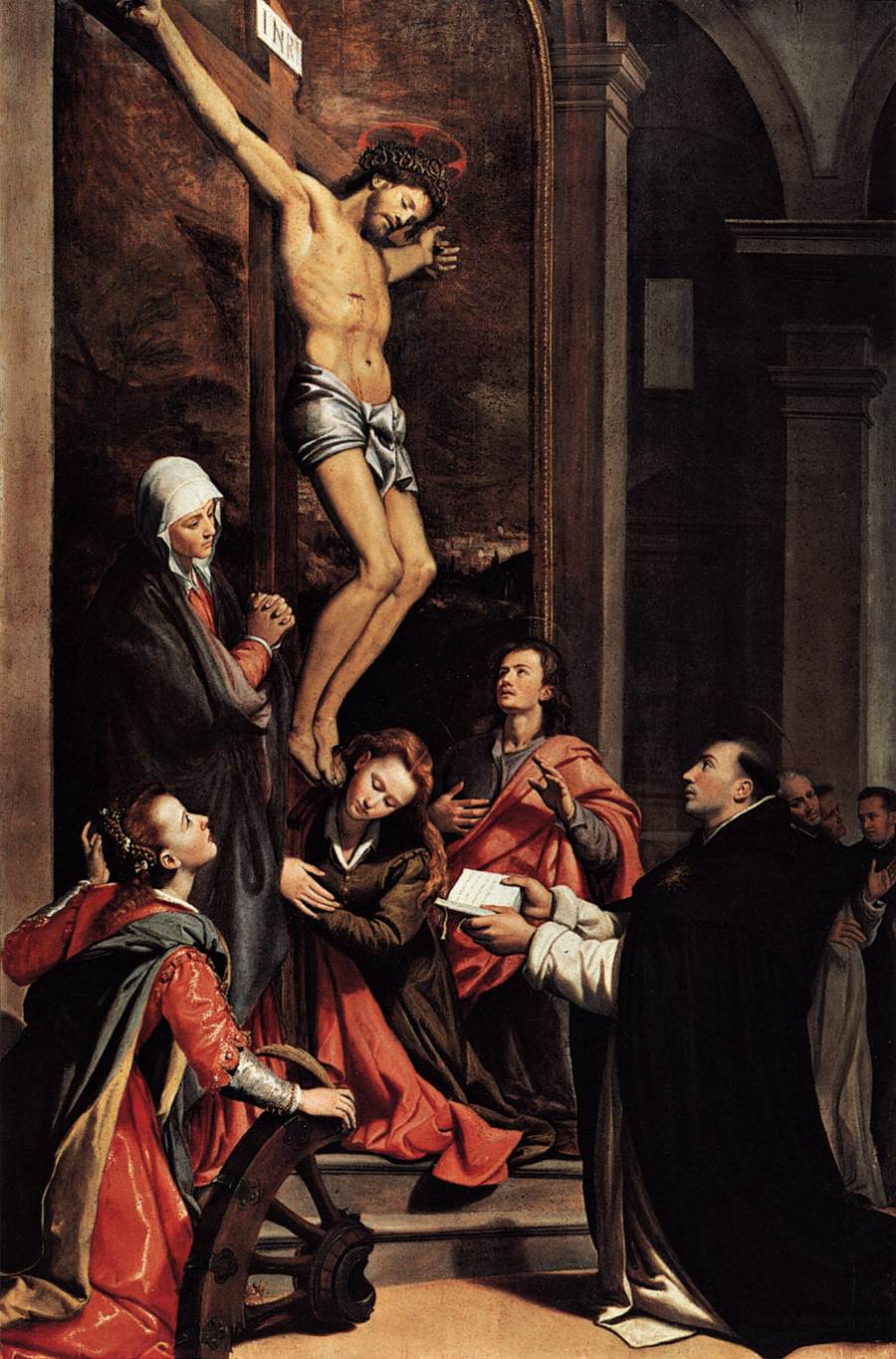
St. Thomas Aquinas

St. Thomas, the Angelic Doctor.
Today marks the feast of St Thomas Aquinas, Dominican friar and Doctor of the Church. Born in 1225, St Thomas joined the Order of Preachers at around nineteen or twenty years of age. After a remarkable career of teaching, preaching and indeed writing, St. Thomas died in 1274, asking in death only that he be granted Jesus Himself. Pope Pius XI advised Christians seeking wisdom to “Go to Thomas.” Was this good advice? To find out we shall consider the Angelic Doctor’s thought on a topic that affects every one every day of their life on earth: sin.

Sin is an ever present reality; it is something we just can’t seem to escape. Even the blessed apostle Paul suffered from the thorn of sin. He did the things he hated and did not the things he loved (Romans 7:15). We, like St Paul, often fall short, we fall into situations which stir up in us conflict, by instinct we call this sin, but what exactly is it?


St Thomas identifies sin as an act, willed by a human being, which is contrary to the eternal law. More simply, it could be said a sin occurs when a person chooses, instead of God, some lower good. Sin is what happens when we forget about God, or in the most grievous cases, when we chose to act against Him. Since it is seemingly ever before us, how then, are we to deal with it?

Well, in fact, it is not man who deals with sin, it is God. As Jesus said, He came ‘to give His life as a ransom for many’ (Matt. 20:28). This redemption was achieved on the Cross. Man had isolated himself from God, and was incapable of healing that wound. It was for this reason that the Son became incarnate, by becoming man He could offer to the Father an infinite act of love, which would always be more pleasing to the Father than any sin. St. Thomas demonstrates that Jesus’s sacrifice on the Cross was an act that not only atoned for all man’s failings, but merited for each man salvation. ‘Grace was bestowed upon Christ… the Head of the Church that it might overflow into His members’ (IIIa, q.48 a.1).

The forgiveness of sins comes from Christ’s passion and death, though we continually stumble and even fall, we never lose hope in the infinite merits of our Redeemer, who nailed our sins to his Cross. However, St. Thomas would not want Christian reflection to stop there. The Cross is not only in our past, it is our hope for the future. Thomas remarks that Jesus did not only merit for man salvation, He also offered the perfect example of what it means to be truly human. Sin, Thomas says, is contrary to human nature because it isolates us from our creator, and to know Him and love Him, and to dwell in His love is our purpose. Christ manifested the meaning of our lives through His constant obedience to the Father.

Jesus’s action was our instruction, as the Dominican scholar Torrell puts it. Thus, when we read the words ‘take up your Cross and follow me’ (Matt. 16: 24) we realise this is a genuine invitation. It is an offer, to let our lives be Christianized so that from our flesh might be driven the thorn of sin.

In this context, the value of the sacraments Christ instituted for His Church becomes all the more apparent. When we sin, we turn to God and ask for His forgiveness in the confessional. It is our own Gethsemane moment, a chance to reflect on our sins, and the sins of all, and walk the way of the Cross, the path of humble obedience. Echoing our Lord we have the privilege to say ‘not my will, but yours be done’ (Luke 22:42).


The sacraments, both signposts to Heaven and channels of grace, are in a sense like the footprints of Christ, spread behind and before us. As we trod in them we walk as Christ walked, and we follow him up Calvary to the place where Sin was destroyed and the Resurrection won.

This, I think, would be St. Thomas’s advice for the sinner. Do not fear. For God has sent to us the Redeemer. Let us neither despair of our sins nor boast of our virtues. Rather, let our glory be the Cross. When we can say that, as the apostles did, then we can follow Christ wherever He may lead us. Of course, it isn’t always easy, but that is why we have the Church and her sacraments, and that is above all why Our Lord has made present every day in every part of the world that saving sacrifice, whereby we are fed with His Body and Blood. Salvation has been given us and the bed of Faith made fertile so that grace might abound, all we need do is keep our trust in God and beseech the merits of the Passion.

St. Thomas said all theology was found in the Psalms, well, in times of adversity and doubt we can sing with the psalmist: ‘hope in the Lord, I will praise him still’ and that is the answer to sin. 

Friday, January 24, 2014

The Conversion of St. Paul

Today we celebrate the feast of the Conversion of St. Paul, an event that has such significance in the life of the Church that the book of Acts relates this incident three times: the reader first hears of how the persecutor Saul became the Christian Paul in chapter 9 from the perspective of Luke the narrator. In Acts 22 we hear the story a second time. On this occasion Paul himself is speaking in Hebrew to a Jewish audience after he is arrested in the Temple in Jerusalem. Finally, in chapter 26 of Acts, Paul again gives his testimony – presumably in Greek - before King Agrippa and the Governor Festus. So the story is told three times: once for us, that is, the readers and listeners; once in Hebrew for the Jews; and once in Greek for the Gentiles: the story of Paul’s conversion is universally relevant. 

Now it may be that this repetition of Paul’s encounter with the Risen Christ in fact reflects Paul’s own preaching. The organizing principle that brings coherence to St. Paul’s life and work is his encounter with the Risen Christ, so it is plausible that this would be a theme he returned to time and time again with both Jewish and Christian audiences. The encounter with the Risen Christ was what the English Dominican Cornelius Ernst OP (1924 – 1977) might have called the ‘genetic moment’ of St. Paul’s faith: a personal encounter with Jesus that communicates the heart and life of the Gospel. We read that on the Road to Damascus the then Saul fell to the ground and heard a voice saying: 

“Saul, Saul, why are you persecuting me?” 
 He said, “Who are you, Lord?” 
 The reply came, “I am Jesus, whom you are persecuting, but rise and enter the city, you will be told what you are to do” (Acts 9: 4 – 5). 

It is worth pointing out here that the earliest Christian creed is usually taken to be: ‘Jesus Christ is Lord’, a formula which provides answers to two questions which are especially relevant to establishing identity: ‘Who is Jesus?’ and ‘What is Jesus?’ Now in his encounter with the Risen Christ on the road to Damascus St. Paul almost receives this Creed from the mouth of Jesus himself. In a lifetime of reflection on this encounter he developed two key convictions: first, that in Jesus God had provided for the salvation of all who believe, and that these believers were so united with God through Christ that they had become members of his body. Second, that Paul himself was called to be Christ’s messenger, Christ’s Apostle to the Gentiles. 

This is why Paul’s conversion is relevant to us, why the Church celebrates this event with a feast. The ‘genetic moment’ of Paul’s faith when he accepted Jesus Christ as his Lord matured in time into an extraordinary missionary zeal that led him to spearhead the Church’s mission to the Empire. In the course of this mission he was obliged to reflect even more deeply on the grace he had received and so left us with a body of writings that makes up half of the New Testament. 

Cornelius Ernst argues that it is the testimony of the New Testament that the ‘genetic moment’ in Christian experience is capable of indefinite extension and renewal in the Holy Spirit, and that from this living centre the whole of human experience is reviewed and revivified. Paul’s influence is such that the Church has been stamped, conditioned, by Paul’s peculiarly intense and insightful experience of Jesus. The ‘genetic moment’ of Paul’s faith has shaped the mind of the Church to such an extent that our experience of Christ through His Body the Church is inevitably informed by Paul’s encounter on the Road to Damascus. In Paul, then, we find an inspired guide able to help us unlock the gift that we have received in Jesus, a guide able to help us see both who Jesus is more clearly, as well as ourselves more clearly in his light: In opening up to us his own experience of Jesus, Paul helps us to unlock what it means to be a member of the Body of Christ.

Tuesday, January 21, 2014

Popular Piety: Litanies and Novenae

“When you pray, do not keep on babbling like pagans, for they think they will be heard because of their many words” (Matthew 6:7). These words of Our Lord are often cited by opponents of the traditional practices of Novenae—which involve the repetition of set prayers on nine consecutive days—and Litanies—with their repeated invocations and responses. These forms of prayer are inherently repetitious and predictable; they are often caricatured as monotonous and lengthy (‘litany’, for example, has passed into idiomatic secular English: “the customary litany of complaints having duly been received…”). 

It would be quite wrong to suppose that Litanies and Novenae are possessed of some magic efficacy, to slip into the belief that they ‘work’ on the basis that if we say something often enough God will eventually give in and grant us our requests. Rather, they are a gift of God to the Church, a way of praying particularly suited to our human condition: it is good for us to turn repeatedly to God, to bring to mind our friendship with Christ in the midst of everyday life and implore his mercy again-and-again. The repetitious nature of litanies helps us to manage distraction and to move more deeply into prayer, as the words begin to flow over us, drawing us beyond the words themselves into a deeper contemplation; the familiar text of a novena becomes an ‘old friend’, a comfort and a guide for our journeying. 

In moments when we can’t find words for ourselves (yes, even garrulous Dominicans find this happens sometimes!), we make our own these well-worn words, tested in the crucible of centuries of Christian witness and endorsed by the Church. We insert ourselves into the community of saints whose names we invoke to pray with us and for us; we recognise that there are others who will say ‘amen’ to our prayers as we say ‘amen’ to theirs. So whilst I have to admit that there are times when I’ve neglected these traditional devotions—and it is certainly important to develop our friendship with Christ through mental prayer—it might be worth me pondering whether I’m more likely to babble like a pagan in my own extemporaneous prayers, or when I turn to these prayers recognised by the Church as a gift of Our Lord.

Fr. Giles Hibbert O.P: Requiescat in pace

Following the the death of our Brother, Giles Hibbert O.P. some members of the Studentate attended his funeral on 15th January at Blackfriars, Cambridge, where Fr. Giles had lived for the past year.  Fr. Giles's friend and brother, Fr. Fabian Radcliffe O.P, gave the homily, which we reproduce here in full.


Homily for the Requiem Mass of Fr. Giles Hibbert O.P.


Had Giles lived another 12 days he would have reached the age of 85. That’s quite an achievement for someone who in the last two decades of his life suffered severe arthritic and neuralgic pain, and kept going largely on morphine. He was certainly tough. Still, we have not come here simply to congratulate him on living beyond the four-score years that the Psalmist allotted to the strongest of us. No. We have come here primarily to commend Giles to the mercy and love of God and to pray that he will enter into the fullness of Christ’s risen life for which he longed. 


So if that is the purpose of a requiem mass, then the homily should not just be a eulogy about the dead person. At the same time how can one preach a funeral homily without saying something about the one who has died? And if you are to speak about him, you will certainly want to speak well of him, which is precisely what a eulogy is.


Incidentally, that word ‘precisely’ was one of Giles’s favourites. But, as he ruefully remarked, Edmund Hill in his review of Giles’ book, gently pointed out that his use of the word was usually in inverse proportion to the clarity of his thinking.


Giles came from what we can call an ‘establishment’ background. His father had been a General in the army and his grandfather an Admiral in the navy. He followed his father into the army, and saw service in North Africa and also in Korea, where, like Julius Caesar, he threw bridges across rivers. After a few years, the army sent him to Cambridge to do a degree in engineering. It looked as though he was set for lifetime in the Army. But that was not to be.


What was it that transformed Captain Robert Hibbert of the Royal Engineers into Brother Giles Hibbert of the Order of Preachers? It’s not easy to say, because he never really talked about it. I sometimes left openings in conversation so that he could reveal more, had he wished; but he never did. But from what little he did say, we know that at Cambridge he had a ‘Damascus Road’ experience: Christ came to meet him, and overwhelmed him, and he was convinced that his only possible response was to become a Catholic and a Dominican. 


We tend to compare experiences like this with St Paul’s conversion. I think Giles had some reservations about St Paul, but he loved St John; and perhaps John’s story of the call of Nathanael is closer to Giles. Nathanael had scoffed at the suggestion that the Messiah might come from the wretched little town of Nazareth. But then Philip took Nathanael to meet Jesus; and Jesus said: ‘Here is a true Israelite in whom there is no guile’. Nathanael was astonished. ‘How do you know me?’ he said. Jesus replied: ‘Before Philip called you, when you were under the fig tree, I saw you’. Just what that means we can never know. But it overwhelmed Nathanael. ‘Rabbi’, he replied. ‘You are the Son of God. You are the King of Israel’. Cambridge, it seems to me, was Giles’ fig tree, where Christ saw him, and knew him, and called him. And like Nathanael he replied: ‘You are the Son of God’.


This experience seems to have come to him out of the blue. But his response must have been a wholehearted ‘yes’, because he never seriously wavered, either as a Catholic or as a Dominican. That’s not to say, of course, that he didn’t have difficult moments, periods when he was exasperated with the Church and with the Order. But then, surely, we all experience that. He always knew that for him any alternative way was simply not possible.  


His life in the Order was characteristically unconventional. He studied in Louvain, taught in the studium, was Regent of Studies for a short time, and worked on a long drawn-out doctorate, with a typically vast theme: the doctrine of man in St Augustine, St Thomas Aquinas and St John of the Cross. At one point he received a letter from his supervisor which began: ‘Dear Mr Hibbert, I do not seem to have heard anything from you for over a year’. He cherished this letter with a mixture of pride and shame. 


Round about this time he became involved with the peace movement, and made links with peace groups in East Germany and with the communist party in Britain. All this was inspired by his sense of justice. But politics was not his strength. He was essentially a highly intelligent engineer, witness his complex model railway set-up in the cellars of Blackfriars, Oxford, and his intricate electric bell system in the Priory entrance hall there. Years later, when Giles had moved away from Oxford, the electrician who dismantled the system marvelled at its sophistication, and could not imagine how anyone could have devised it. 


In the late sixties he and I embarked on a series of epic holidays: canoeing down the River Severn, exploring the north-west of Scotland, five times to the west of Ireland, and then to Spain, Portugal, Italy and Greece. In the early eighties he moved into university chaplaincy at Sheffield and briefly at York, and became a strong supporter of Student Cross. Later he moved to our house in south Manchester, where he began Blackfriars Publications, printing and publishing small theological pamphlets, which he saw as his contribution to our preaching apostolate. He became the national chaplain to the Newman Association, and chaplain to its Manchester and North Cheshire Circle.


After the closure of the Manchester house he moved to Chapel-en-le-Frith; and there he stayed, still publishing, until it became too difficult for him to live on his own, and he moved to the London Priory, and later here to Cambridge.


So he came back to be with his brethren in a priory. And he settled in remarkably well. He was not always easy to live with. He could be fractious, aggressive and contemptuous. But this did not come from malice or perversity, I think, but from a temperamental impatience with what he took to be hypocrisy or pomposity or limp piety or self-deception in others. Sometimes he realised his judgement of someone was quite wrong, and then he was disarmingly and sincerely repentant. Those who looked after him when he needed it in his later years discovered that though he could be exasperatingly difficult, he was at the same time humbly grateful for their care. The novices, I am sure, will remember this. Some years ago at Chapel-en-le-Frith, after he had been ill in a local nursing home, he went back, with presents, to say thank you to the staff who had cared for him. 


That illness sparked another change: a deeper reflection on death and purgatory. He had earlier been puzzled, perhaps sceptical, about purgatory. Some years before, when Bob Ombres wrote a booklet on purgatory for Blackfriars Publications, Giles wanted to entitle it: ‘Purgatory? You must be joking!’ But now, faced with the prospect of dying, he clarified his thoughts in a short paper which he called ‘Embracing the Future’. We are to die with Christ, he says, so that we can live with Him. And he suggests that at death, “in a flash of timelessness”, we are confronted with all those whom we have hurt, confronted with all the times and ways that we have put ourselves first, either in aggression or through laziness. And we are healed by the loving presence of the Christ who stands by us as friend, teacher and healer. 


So purgatory is not passive – being healed or cleansed – but rather a process of responding positively to those whom we have hurt, having to meet the challenge of being healed through them in Christ. So one is able to say: “I look forward to dying, however painful the experience of purgatory is going to be”. It is better, he says, to speak of ‘dying’ rather than ‘death’; the one is positive, the other somewhat negative. “Dying authentically”, he says, “is rather like building a bridge – constructive and creative, a leap forward towards something new – the other side”. So the elderly, ailing friar joins hands with the young army engineer. 


I cannot but think that this is the spirit in which Giles embraced his own death, in which he sought forgiveness, in Christ, of all those whom he had harmed and wounded. “I hope”, he wrote (in words that might have been written for today) “that I don’t ‘meet’ any of you ‘there’; for it would mean that I had at some time hurt you, or failed in caring for you. I hope, however, that we shall all ‘meet up’ purified in the glory of the light of the Resurrection – in other words, in Heaven”. And then, characteristically, he adds: “whatever the meaning of ‘meeting up’ might be”.


Fr. Giles Hibbert O.P.


Sunday, January 19, 2014

Popular Piety: The Sacred Heart of Jesus

The Sacred Heart of Jesus is an image etched deeply in the minds of many Catholics. The devotion emphasises the perfect, redeeming love of Jesus, and the living water which flows from His heart (cf Jn 7:37-39).


The origins of this longstanding piety lie in the Medieval period.  It was promoted by, amongst others, the Flemish Mystic St. Lutgarde of Aywieres (1182-1246) and St. Gertrude the Great (1256-1302). It was not until the seventeenth century, however, that the devotion became more widespread in its popularity through its promotion by these two notable individuals, and the Society of Jesus more generally. St. John Eudes (1601-1680) a Frenchman who was educated by the Jesuits, wrote The Life and Royalty of Jesus in the Christian Soul in 1637 and composed the Office of the Sacred Heart in 1668. Both works served to dramatically increase the numbers of people honouring the Sacred Heart. Another French saint, St. Margaret Mary Alacoque (1647-1690), had visions of the Sacred Heart and her writings led to the twelve promises of Our Lord made to those devoted to His Sacred Heart. The Jesuits saw in the Sacred Heart a powerful antidote to Jansenism, which emphasised the futility of life; their followers enkindled a sense of God’s remoteness and the soul’s predestination to heaven or hell.

Since 1856, the Church has kept the Solemnity of the Sacred Heart of Jesus on the Friday which follows the Second Sunday after Pentecost. The entrance antiphon we say at Mass reads: “The thoughts of His Heart last through every generation, that He will rescue them from death and feed them in time of famine” (Ps. 31:11,19). 

Our Lord is compassion and love. Devotion to the Sacred Heart stirs us to call upon Him who provides all things, and to dedicate ourselves to Him in loving humility. We have in the Sacred Heart of Jesus, therefore, a timeless devotion which we would do well to make our own.

Prayer to the Most Sacred Heart of Jesus
O most holy heart of Jesus, fountain of every blessing, I adore you, I love you, and with lively sorrow for my sins I offer you this poor heart of mine. Make me humble, patient, pure and wholly obedient to your will. Grant, Lord Jesus, that I may live in you and for you. Protect me in the midst of danger. Comfort me in my afflictions. Give me health of body, assistance in my temporal needs, your blessing on all that I do, and the grace of a holy death. Amen.

Popular Piety: The Sacred Heart of Jesus

The Sacred Heart of Jesus is an image etched deeply in the minds of many Catholics. The devotion emphasises the perfect, redeeming love of Jesus, and the living water which flows from His heart (cf Jn 7:37-39).


The origins of this longstanding piety lie in the Medieval period.  It was promoted by, amongst others, the Flemish Mystic St. Lutgarde of Aywieres (1182-1246) and St. Gertrude the Great (1256-1302). It was not until the seventeenth century, however, that the devotion became more widespread in its popularity through its promotion by the two notable individuals, and the Society of Jesus more generally. St. John Eudes (1601-1680) a Frenchman who was educated by the Jesuits, wrote The Life and Royalty of Jesus in the Christian Soul in 1637 and composed the Office of the Sacred Heart in 1668. Both works served to dramatically increase the numbers of people honouring the Sacred Heart. Another French saint, St. Margaret Mary Alacoque (1647-1690), had visions of the Sacred Heart and her writings led to the twelve promises of Our Lord made to those devoted to His Sacred Heart. The Jesuits saw in the Sacred Heart a powerful antidote to Jansenism, which emphasised the futility of life; their followers enkindled a sense of God’s remoteness and the soul’s predestination to heaven or hell.

Since 1856, the Church has kept the Solemnity of the Sacred Heart of Jesus on the Friday which follows the Second Sunday after Pentecost. The entrance antiphon we say at Mass reads: “The thoughts of His Heart last through every generation, that He will rescue them from death and feed them in time of famine” (Ps. 31:11,19). 

Our Lord is compassion and love. Devotion to the Sacred Heart stirs us to call upon Him who provides all things, and to dedicate ourselves to Him in loving humility. We have in the Sacred Heart of Jesus, therefore, a timeless devotion which we would do well to make our own.

Prayer to the Most Sacred Heart of Jesus
O most holy heart of Jesus, fountain of every blessing, I adore you, I love you, and with lively sorrow for my sins I offer you this poor heart of mine. Make me humble, patient, pure and wholly obedient to your will. Grant, Lord Jesus, that I may live in you and for you. Protect me in the midst of danger. Comfort me in my afflictions. Give me health of body, assistance in my temporal needs, your blessing on all that I do, and the grace of a holy death. Amen.

Popular Piety: Scapulars and Medals

 “… I suppose they try to make you believe an awful lot of nonsense?”
“Is it nonsense? I wish it were. It sometimes sounds terribly sensible to me.”
“But my dear Sebastian, you can’t seriously believe it all.”
“Can’t I?”
“I mean about Christmas and the star and the three kings and the ox and the ass.”
“Oh yes. I believe that. It’s a lovely idea.”
“But you can’t believe things because they’re a lovely idea.”
“But I do. That’s how I believe.”

This wonderful conversation between Sebastian and Charles in Brideshead Revisited might easily have been triggered by scapulars and medals. To those outside the Church they are often viewed as confirmation of the lunacy of Catholics, and indeed to some within they are viewed as an expression of an out-dated medieval mindset of superstition. Yet properly considered, they are an expression of the fact that God meets us in the physical as well as the spiritual – that The Word became flesh. As Chesterton wrote in one of his columns: Whenever men really believe that they can get to the spiritual they always employ the material. When the purpose is good, it is bread and wine; when the purpose is evil, it is eye of newt and toe of frog. It is worth being aware of a tendency - that I certainly find present in myself - to credit God with so much in His Creation and in His Incarnation and then to express incredulity at small marvels and signs.

Scapulars...

A scapular is a kind of sacramental: a prayer, action, or thing which, through the prayers of the Catholic Church, can assist us in receiving God's grace The word "scapular" comes from the Latin word for "shoulder." In its original form, the scapular is a part of the monk or friar’s habit. However, in popular piety scapulars are most often composed of much smaller pieces of cloth. Technically, these are known as the "small scapulars". Each small scapular represents a particular devotion and often has a certain indulgence or even a revealed "privilege" (or special power) attached to it.

The most famous of the small scapulars is the Scapular of Our Lady of Mount Carmel (the "Brown Scapular"), revealed by the Blessed Virgin Mary herself to St. Simon Stock on July 16, 1251. Those who wear it faithfully as an expression of devotion to the Blessed Virgin Mary, it is said, will be granted the grace of final perseverance. 


A scapular is not a magic amulet or a lucky charm: rather, when worn with devotion, scapulars have the capacity to help us in our Christian life because they can inspire good thoughts and thus increase devotion. Whilst some scapulars are associated with a particular message, it must be remembered that since sacramentals are not magic, the efficacy of the scapular and its guarantee depends on the faith and appropriate intentions of the wearer. The Vatican Directory on Popular Piety describes it thus: “The Brown Scapular is an external sign of the filial relationship established between the Blessed Virgin Mary, Mother and Queen of Mount Carmel, and the faithful who entrust themselves totally to her protection, who have recourse to her maternal intercession, who are mindful of the primacy of the spiritual life and the need for prayer.”

Medals....

Among the various medals, the most popular is the "Miraculous Medal". Its origins go back to the apparitions in 1830 of Our Lady to St. Catherine Labouré, a novice of the Daughters of Charity in Paris. The medal was struck in accordance with the instructions given by Our Lady and has been described as a "Marian microcosm" because of its extraordinary symbolism. It recalls the mystery of Redemption, the love of the Sacred Heart of Jesus and of the Sorrowful Heart of Mary. It signifies the mediatory role of the Blessed Virgin Mary, the mystery of the Church, the relationship between Heaven and earth, this life and eternal life. The Church blesses such objects of Marian devotion in the belief that "they help to remind the faithful of the love of God, and to increase trust in the Blessed Virgin Mary".