Monday, June 30, 2008

A-Z of Paul: Body

In antiquity the imagery of the body was used in a figurative and corporate sense in mythology and for groups of people. Thus the term 'body' referred to the whole group and the term 'limb' to an individual within the group. St. Paul used this already existing metaphorical language and applied it to a reality that took the language beyond mere metaphor. For when St. Paul refers to the Body of Christ, in Ephesians 5:30 for example, "because we are members of his body", he is not simply referring to Christians as individual members linked together as the limbs of a body are linked together but is referring to a mystical reality. In baptism Christians are united into one body not only as the members of an organisation are joined together by their common allegiance - although this is also true - but principally by the mystical character that the sacrament confers.

St. Paul also uses the Greek word for body, soma, to mean a person, a human being. For Paul, in contrast to those who would deny the value of the body (such as the gnostics who were to come later) human beings are a union of soul and body, both of which were created by God and are therefore both good and holy. Even in the realm of the spirit, or soul, human existence is a bodily existence. However, Paul also uses the word body to speak of sins that are bound up with our physicality. Certain sins come about when one gives in to the ways of the flesh rather than following the ways of the spirit, spiritual ways. In using the term "sins of the flesh" St. Paul is not claiming that the body is inherently bad but only that there are certain sins which those who place their physicality above their spirituality will be liable to commit.

Indeed Paul makes clear the exalted place given to the body in the Christian faith by his focus on the bodily resurrection from the dead. We will not be ourselves again, even if we are in heaven, until we are re-united with our bodies at the general resurrection. The body is the place where the Holy Spirit dwells within us as baptised Christians: "do you not know that your body is a temple of the Holy Spirit within you which you have from God? ... So glorify God in your body"(1 Cor. 6:15, 19f).

Saturday, June 28, 2008

A-Z of Paul: Apostleship

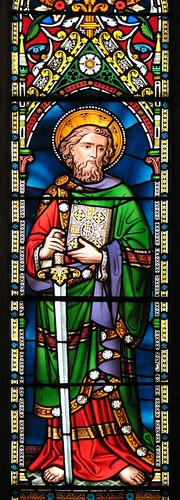
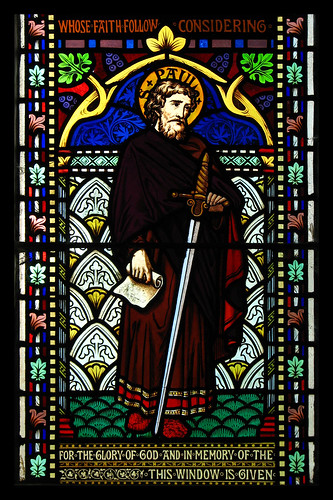
St Paul During his earthly ministry, Jesus gave the title of apostle to twelve of his disciples. He instructed them to preach that the Kingdom of heaven is close at hand and he gave them the authority to heal the sick and to cast out demons. When the apostles appointed a replacement for Judas, the criterion that was set was that this office should be filled not only by someone who had seen the risen Lord, but also by someone who had travelled with him during his ministry.

Paul does not quite fit both criteria. He claimed to have witnessed the risen Lord on the way to Damascus, but he was not with Jesus before the resurrection. Indeed, some Christians did question Paul’s apostolic credentials. Even Paul himself, acknowledging his infamous past, was aware of his unworthiness to be called an apostle.

Yet to deny Paul’s apostleship would be to deny the authenticity of his Christian teaching. Paul’s authority didn’t come by letters of recommendation from other leading Christians, but rather it stemmed directly from his encounter with the risen Lord, an encounter which was totally transforming. Paul’s transformation from zealous persecutor of Christians to Apostle to the Gentiles is a remarkable sign of God’s amazing grace. Although Paul was able to perform wondrous signs and experience spiritual ecstasies, he down played these in favour of preaching the cross. With his apostolic authority, he used it to build people up rather than knocking them down. He was an example of power emptied out in service to others.

Paul did boast, but his boasting was on behalf of the Lord; saying anything less would be to deny the wonderful way in which Christ manifested his glory. Paul fulfilled his mission faithfully to the end. He was sent out by God to proclaim Christ’s death and resurrection, a message he proclaimed not only through his words but also in the way he lived his life and in the way he died.

Friday, June 27, 2008

The Feast of Sts Peter and Paul


The Feast of Sts Peter and Paul celebrates the two outstanding apostles of the Church.  In many ways these two men were different. Peter was from Galilee, a fisherman, poor and uneducated. Although St Jerome tells us that Paul too was a Galilean, his enforced exile to Tarsus as a child opened other possibilities for him: he was well educated and knew his way around the Roman system, perhaps even being a Roman citizen. He trained in the rigorous code of the Pharisees. He was a lawyer but also a skilled tentmaker. How is it their stories became intertwined? What brought these men to give their best efforts and ultimately their lives for the embryonic Christian faith?

The answer lies in the fact that both these men came face to face with Jesus Christ, who called them to follow him. That encounter and call transformed their lives forever. Peter, impulsive and rash, struggled all through Jesus' ministry to understand and believe in the meaning of Christ.  In Matthew 14:22-35 as Jesus walks on the water, Peter impulsively demands proof that it is indeed Jesus by allowing him also to walk on water. As he takes his first few steps, he begins to be beset by doubts and sinks until Jesus reaches out and holds him up. The words “You of little faith, why did you doubt?” seem to be a recurring theme for Peter as he struggles, and often fails, to make sense of this life changing relationship. Yet it is the same Peter who responds to the prompting of the Spirit and declares boldly “You are the Christ, the Son of the living God” (Matthew 16:16). Ultimately Christ draws out the best of Peter to whom he entrusts the leadership of the Apostles and who will go on to preach the first sermon of the Christian Church at Pentecost, while on fire with the Holy Spirit.

We meet Saul in the Acts of the Apostles, full of righteous zeal against these dangerous Christians, approving of the stoning of St Stephen. It is while on a mission to hunt down Christians in Damascus that he has his literally earth shattering encounter with the Risen Christ. He is left blinded, dazed and confused. Stripped of all his certainty, power and assuredness, he must be led by the hand into the city, not knowing where he is going, lost and frightened.  Through the power of the Spirit the scales fall from Saul’s eyes so that he can see.  But in seeing not only with the eyes of the body but also with the eyes of the soul, Paul is reborn in baptism. In this new life, he goes on the preach the Gospel of Jesus Christ all over the Mediterranean as far as Rome, hoping to travel on to Spain, 'the ends of the earth', and leaving us the precious teaching of his epistles and the wonderful example of his life and ministry. For both men these words seem appropriate. “For God who said, ‘Let light shine out of darkness’, made his light shine in our hearts to give us the knowledge of God’s glory displayed in the face of Christ” (2 Cor 4:6).

Wednesday, June 25, 2008

Jubilee Year of St Paul

"You are the chosen instrument of God, Saint Paul, the apostle of the nations. You are the preacher of truth in all the world" - responsory for the feast of the Conversion of St Paul
St Paul
To mark the 2000th anniversary of St Paul, Pope Benedict XVI has exhorted the Church to celebrate a year of St Paul to begin on 28 June 2008 and run to 29 June 2009. The 'Pauline Year' will be a period for us to reflect on the writings and example of St Paul, and to renew our desire to spread the Word of God. Our world, like the world that St Paul inhabited, needs our Christian witness of love and a dynamic preaching that engages with the concerns of our contemporaries and transforms the philosophy of the age with the truth of the gospel. Thus, the Holy Father said, "Today, too, Christ needs apostles ready to sacrifice themselves. He needs witnesses and martyrs like St. Paul", and so, we are invited to respond generously and courageously to God's call.

As preachers of the truth, Dominicans have a special love for St Paul and seek to share in his apostolic life of itinerant preaching. We recall the words of St Paul who said: "God chose what is foolish in the world to shame the wise… so that no human being might boast in the presence of God. He is the source of your life in Christ Jesus, whom God made our wisdom, our righteousness and sanctification and redemption; therefore, as it is written, ‘Let him who boasts, boast of the Lord’” (1 Cor 1:27-31). Thus, St Paul offers a witness of humility to those of us who wish to follow in his footsteps. He also reminds us not to rely on "lofty words or wisdom" but rather on God's Holy Spirit so that our "faith might not rest in the wisdom of men but in the power of God" (see 1 Cor 2:1-5). In this regard, one is reminded of the advice of the fifth Master of the Order, Bl Humbert of Romans, who said in his Treatise on Preaching: "Since human effort can achieve nothing without the help of God, the most important thing of all for a preacher is that he should have recourse to prayer, asking God to grant him speech that will be effective in bringing salvation to his hearers".

With this in mind, Godzdogz invites you to join us on this year-long journey as we celebrate the Year of St Paul. In the next few months we shall present an A-Z of themes in St Paul's writings. Later in the year, we plan to follow Paul's example of dialogue with contemporary ideas by presenting a response to the challenges of the so-called 'new atheism'.

Saturday, June 21, 2008

Sunday 12 Ordinary Time - The Commission


The third reading for today is taken from a section in Matthew's gospel where the main theme is mission (please see text). It contains some very formidable exhortations. In Matt 10:27, for example, we hear Jesus say 'What I tell you ... proclaim from the roof tops.'


At present, European football is in all its glory. No team just goes out on the field and plays any how. Each team goes out with a plan, and each team has a captain. The event that Matthew records for us in chapter 10 is quite similar to football in this respect. As Christians we belong to a team. And, Jesus is our captain. But, he is also the coach. What we ought to do as Christians we do not have to try to figure out for our selves on the field. He has already laid down the plan for us and he is with us always leading us. What we need to do now is follow him and his plan. 

Indeed, it is true that the task that is laid before us is enormous. And, we must also admit, some of the instructions can be puzzling. For example he refers to 'one who kills body and soul in Gehenna'. Who is that? Is it God or is it the devil? However difficult these challenges may be, we are obliged  not  to evade them. Perhaps, when we are confronted with these challenges, we must stop and ask ourselves what exactly is the basic task that has been entrusted to us? Getting this in focus may then help us to see the other things better.

Now, what is the basic task? The basic mission with which we are entrusted is to proclaim the simple message of both John the Baptist and Jesus: 'The kingdom of heaven has drawn near.'

Monday, June 16, 2008

fr John-Martin McGowan OP RIP


Please pray for the eternal repose of our brother John-Martin McGowan,
a member of the Edinburgh community, who died suddenly today

Born: 11 May 1949
Professed: 14 November 1981
Died: 16 June 2008

Requiescat in pace

Sunday, June 15, 2008

Final Week of Term at Oxford

Eighth week of Trinity term in Oxford is normally very busy. Some of us have finished gruelling exams at the University Schools, others are preparing for oral exams in Blackfriars, or have final essays and tutorials to complete, and of course there are friends to say good bye to as the academic year draws to a close and people disperse for the summer. Many of the Dominican students will spend time away from the Oxford priory this summer doing pastoral work in various parishes and priories in England and Scotland.

Godzdogz will begin the summer with a series of posts to mark the inauguration of the Year of St Paul (28 June 2008 - 29 June 2009). We also hope to bring you reports from our parish assignments and from the annual Dominican pilgrimage to Lourdes.

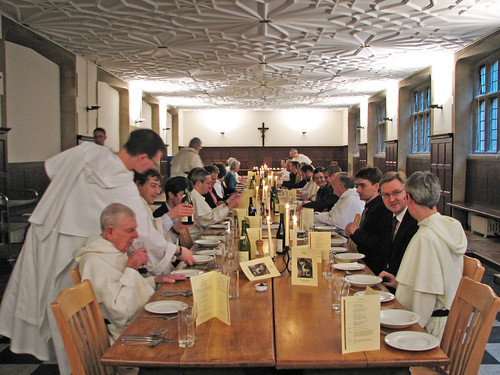
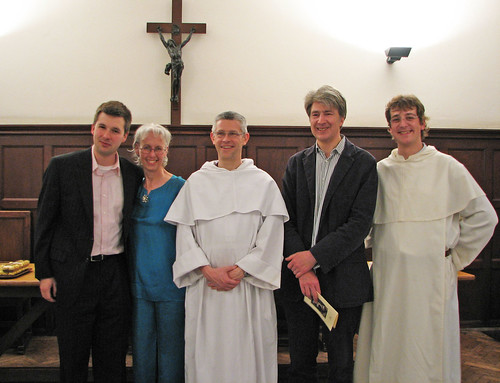
Below are photos from some final week events that took place in the Oxford priory. On 11 June we had a dinner for those students who have completed their course of studies at Blackfriars. The Leavers' Dinner was a chance for the community to congratulate them and wish them well for the future.

Leavers1

Leavers2
Above, the Regent of Studies, fr Richard Finn OP with this year's Leavers: Mr Sean Hilscher, Mrs Katie Richardson, Mr Alexander Norman and fr Didier Croonenberghs OP.

Information about courses at Blackfriars Hall is available online.

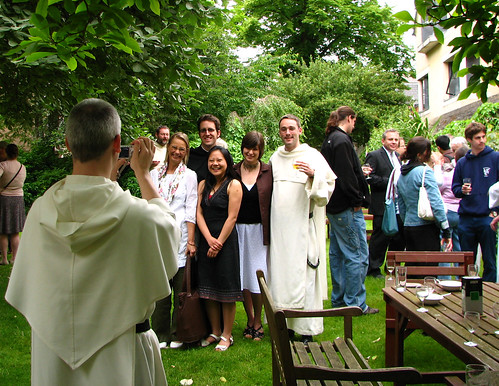
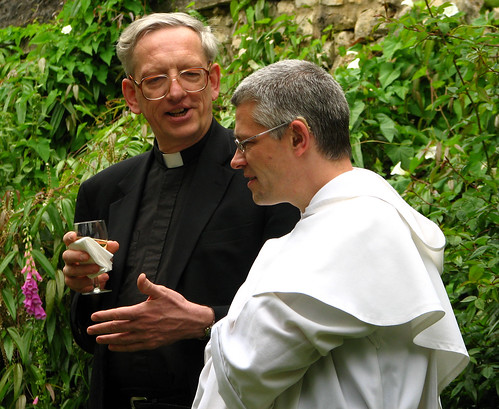
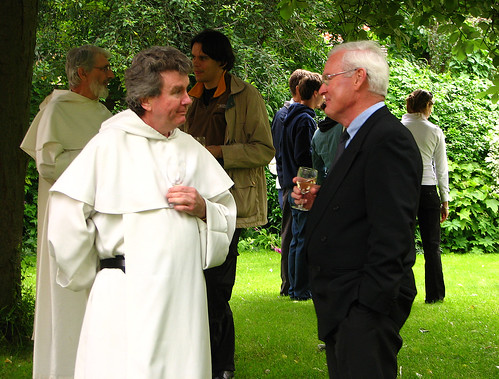
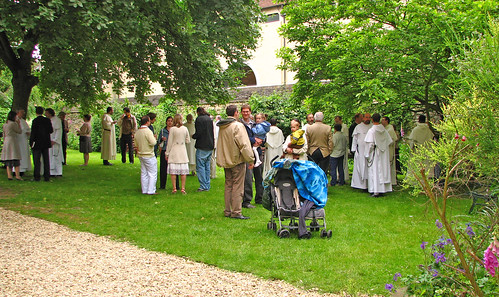
Another annual event took place on 13 June: the Hall & Studium Garden Party. This is always a convivial and relaxed occasion which even the overcast British weather could not dampen. Students and tutors mingle and socialise together over a glass of wine and some strawberries, and they recollect the events of the past year.

Blackfriars Garden Party 2008

Garden Party conversation

GP3

GP4

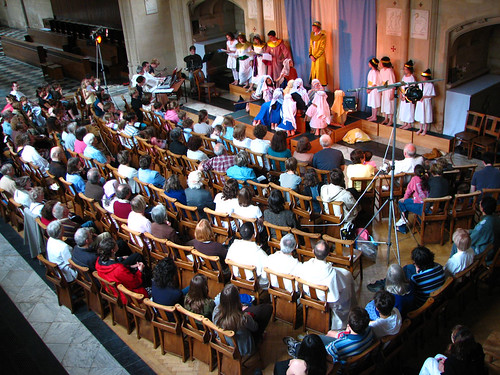
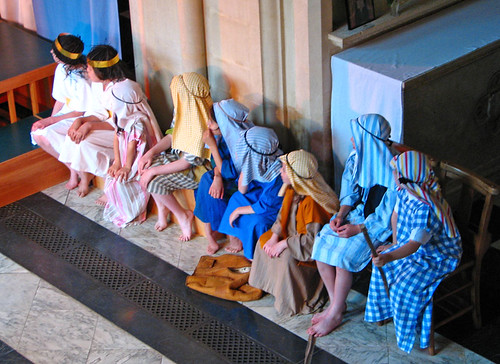
Finally, on 14 June, the children of the 9.30am Mass congregation put on a fantastic performance of 'Joseph and his Amazing Technicolor Dreamcoat'. This was their contribution to our on-going attempts to raise money for the Priory Renewal Fund.

Joseph1

Joseph3

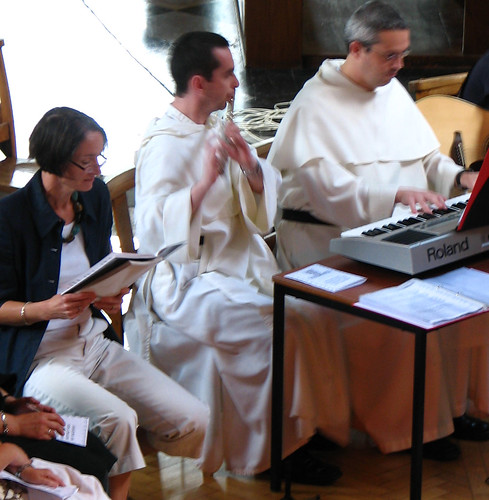
Musicians
Above, fr David Rocks OP and fr Thomas Skeats OP lent their musical talents to the band who performed Andrew Lloyd Webber's musical.